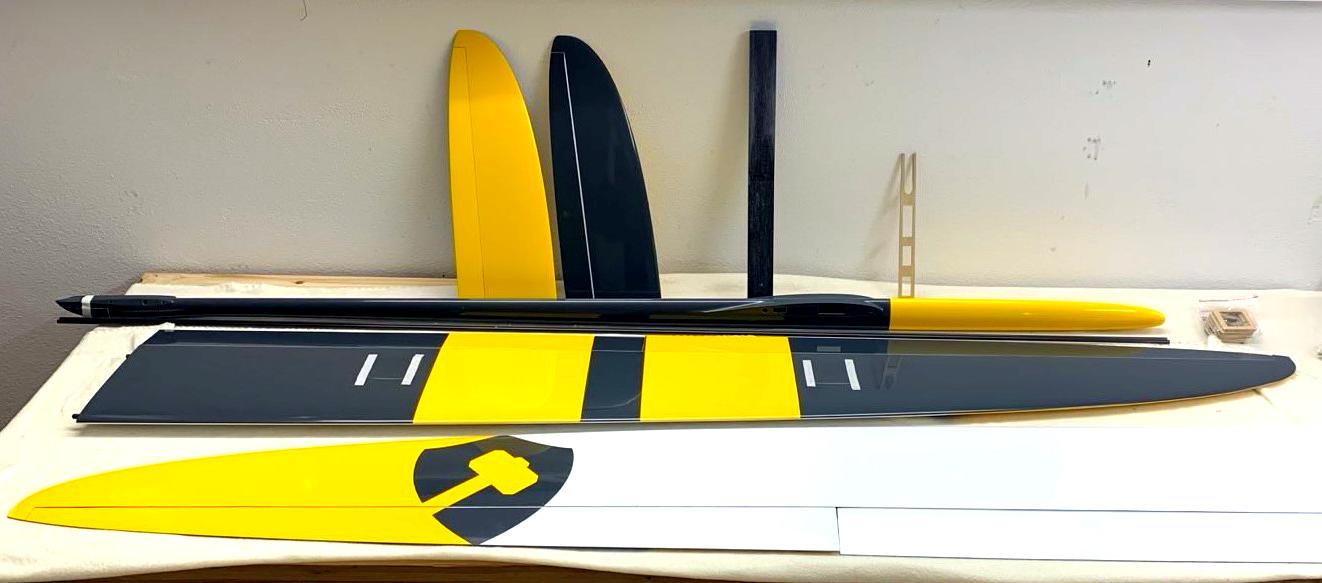
The
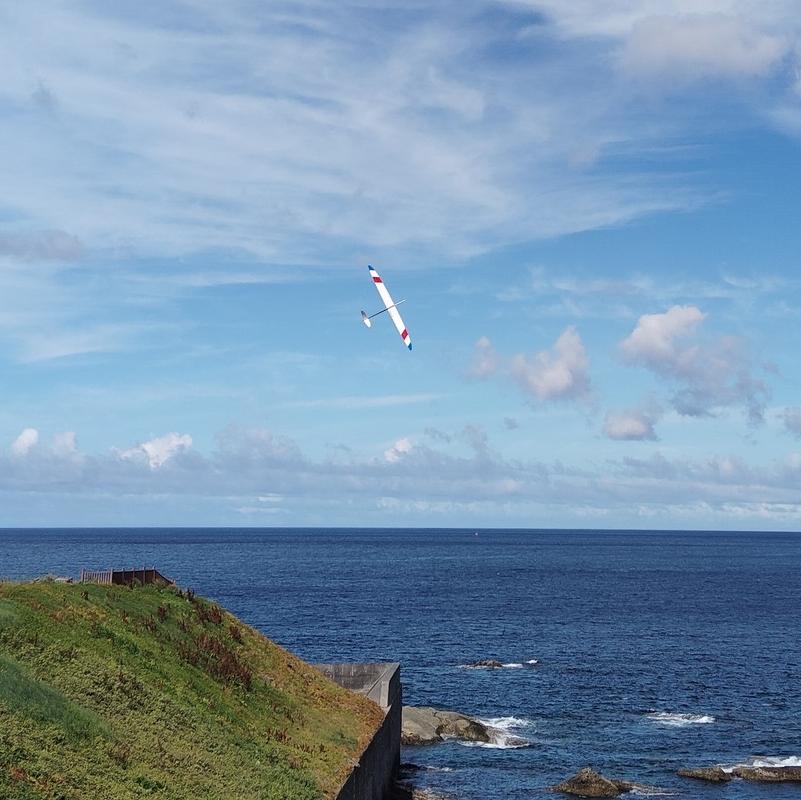
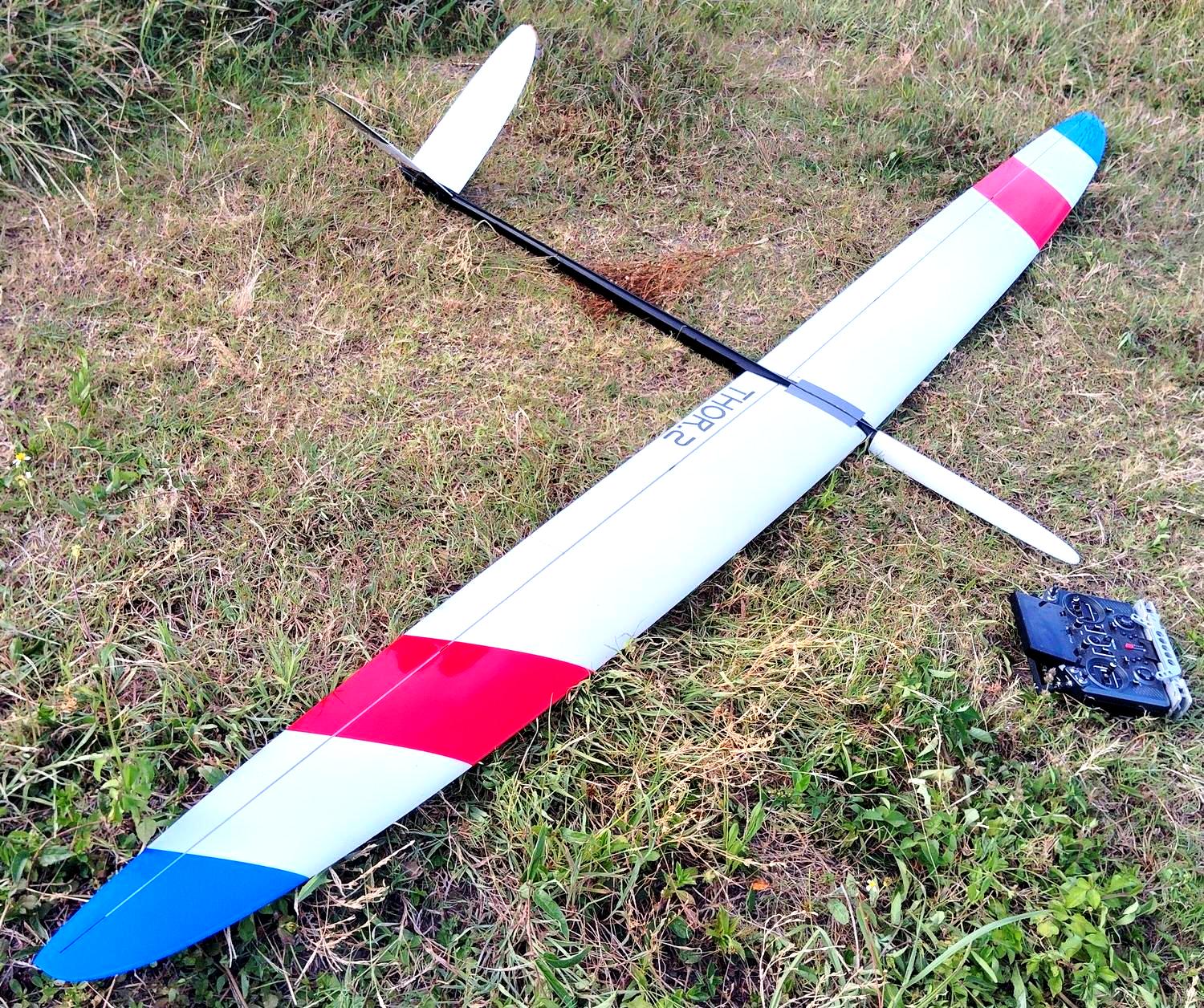
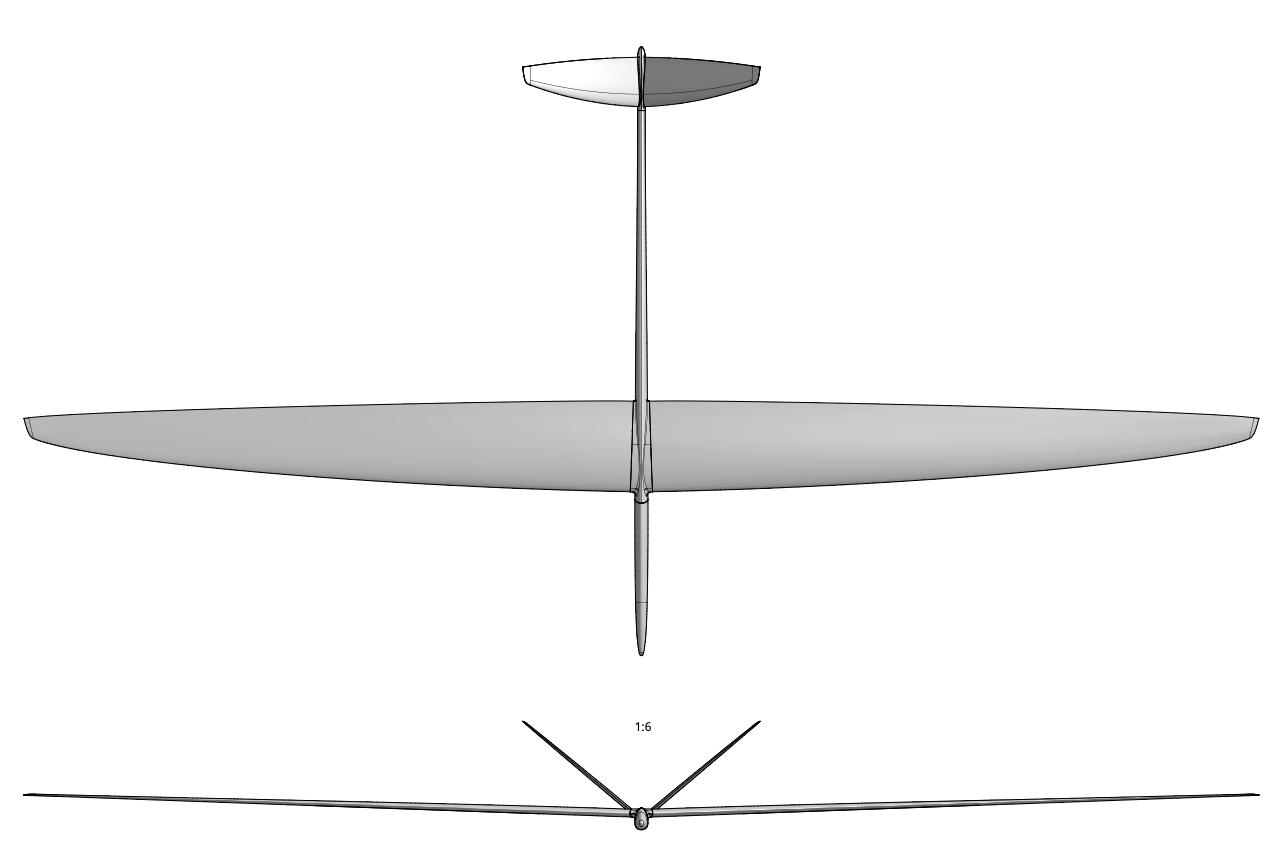
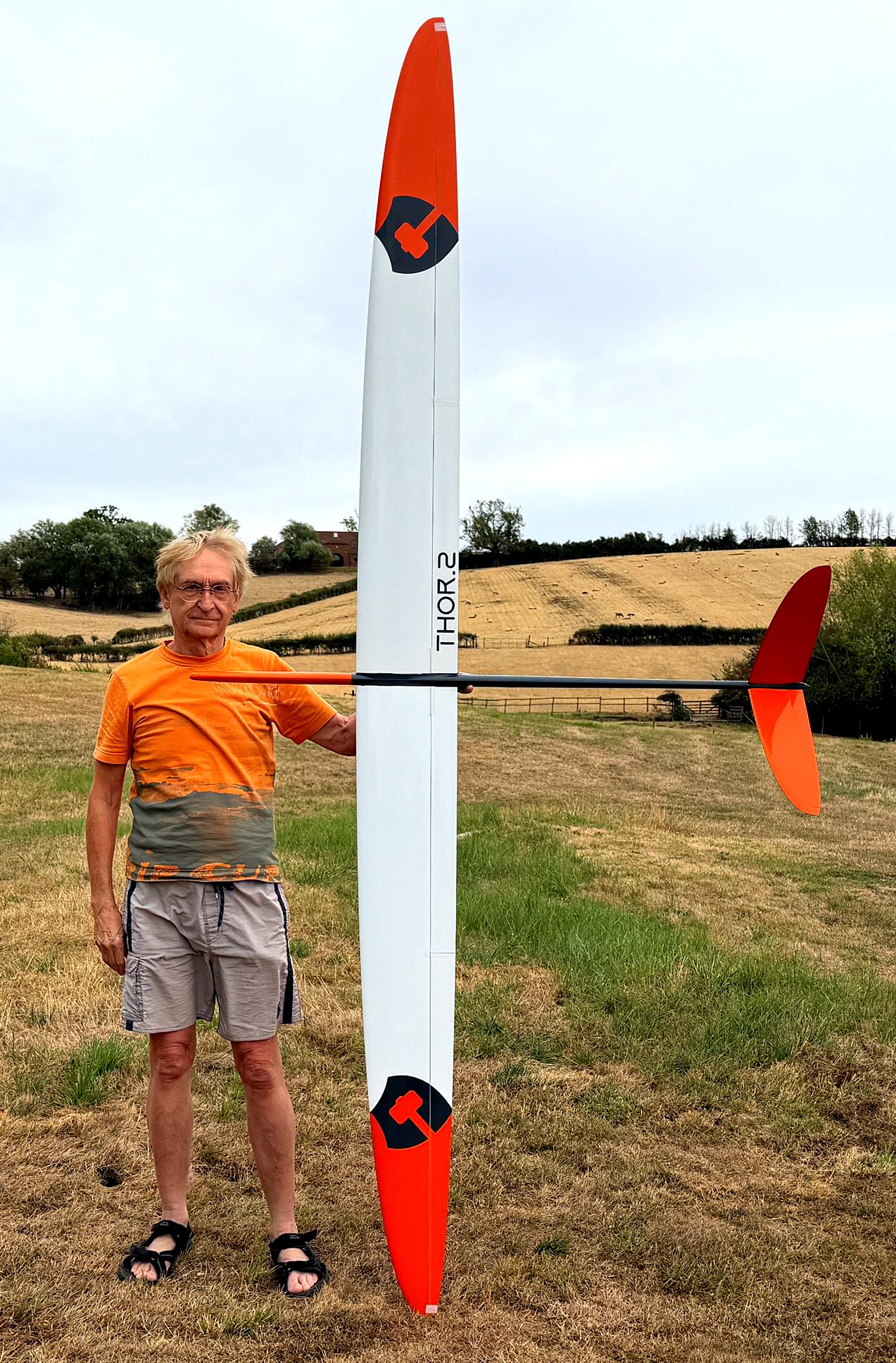
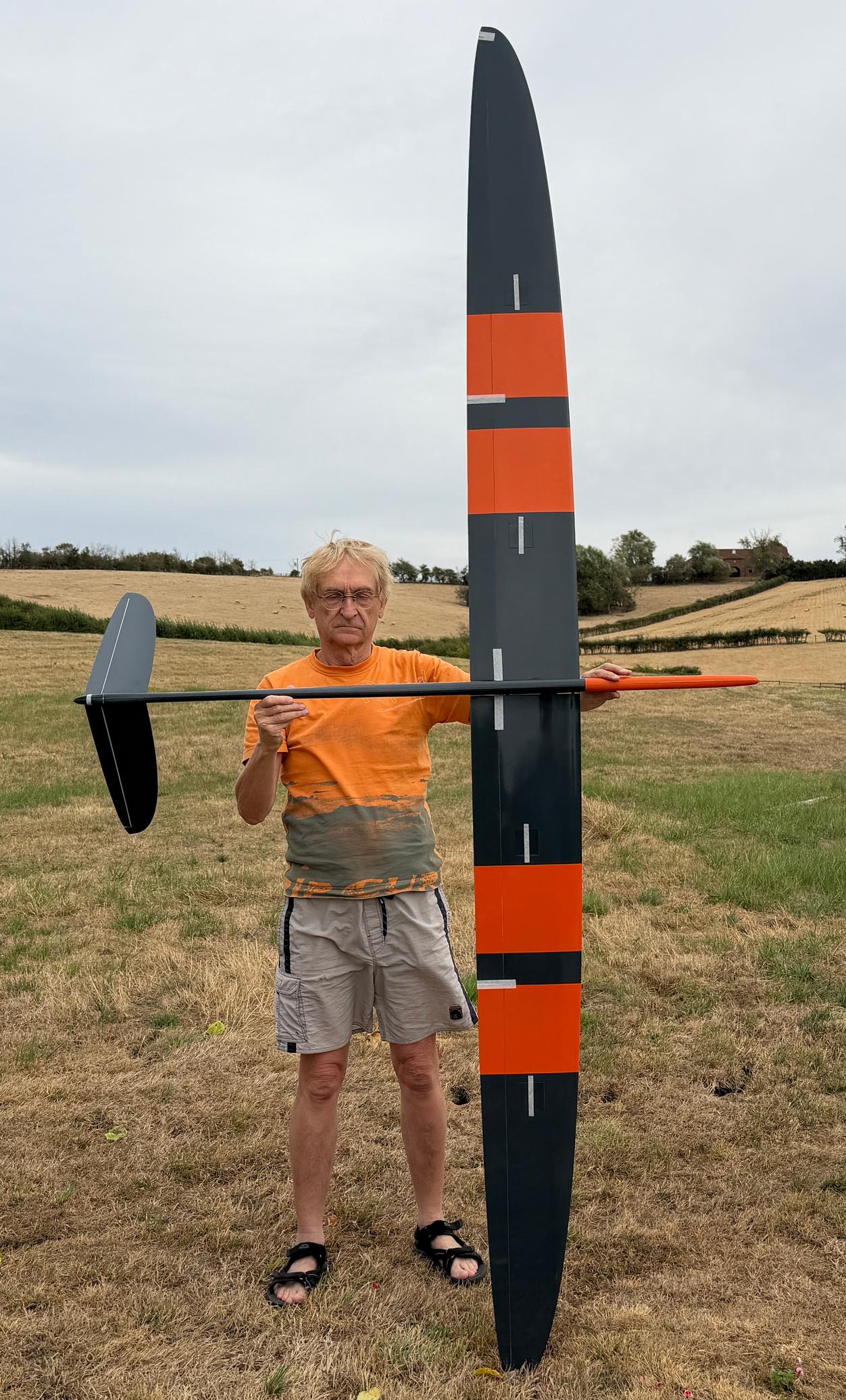
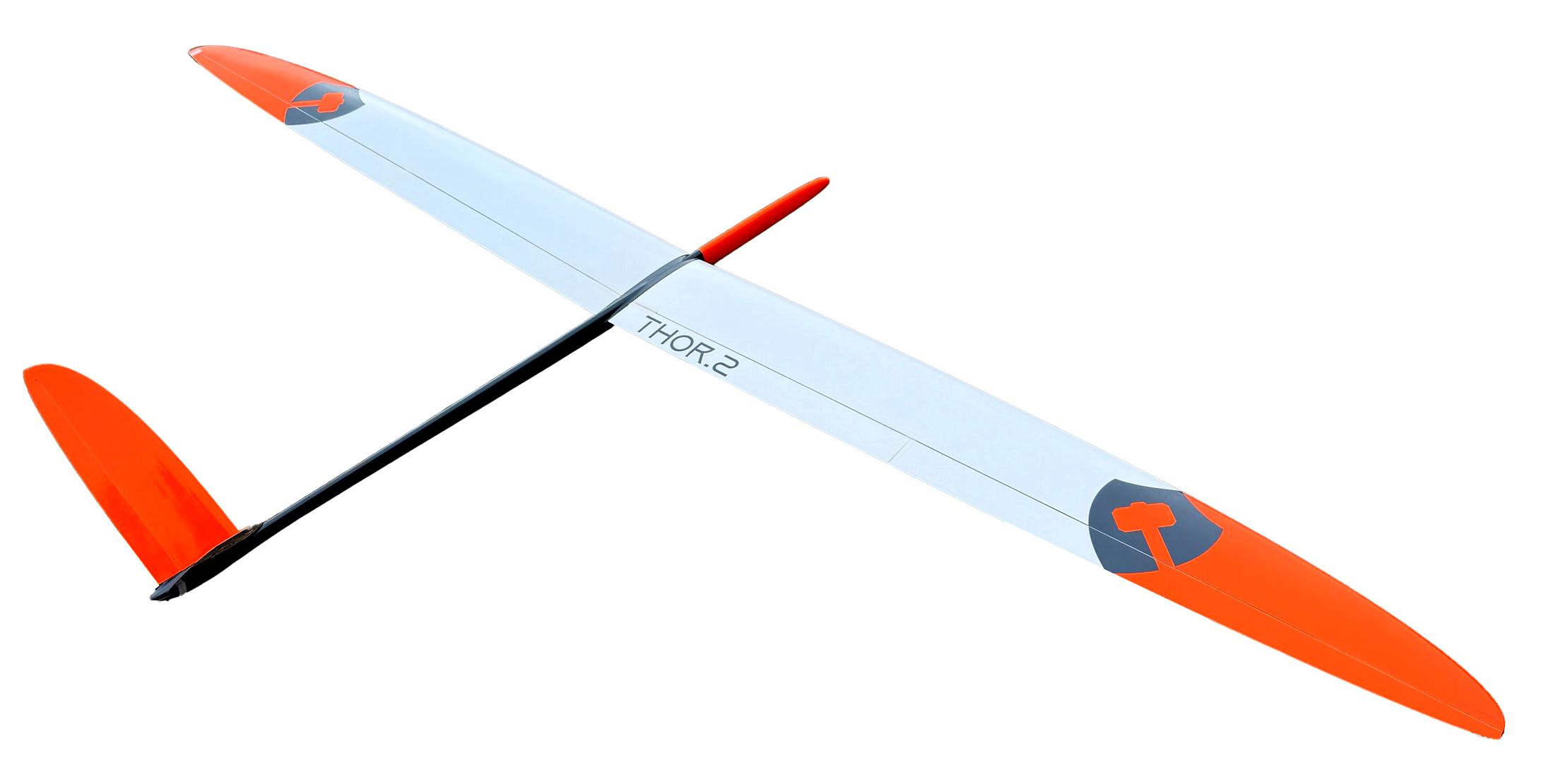
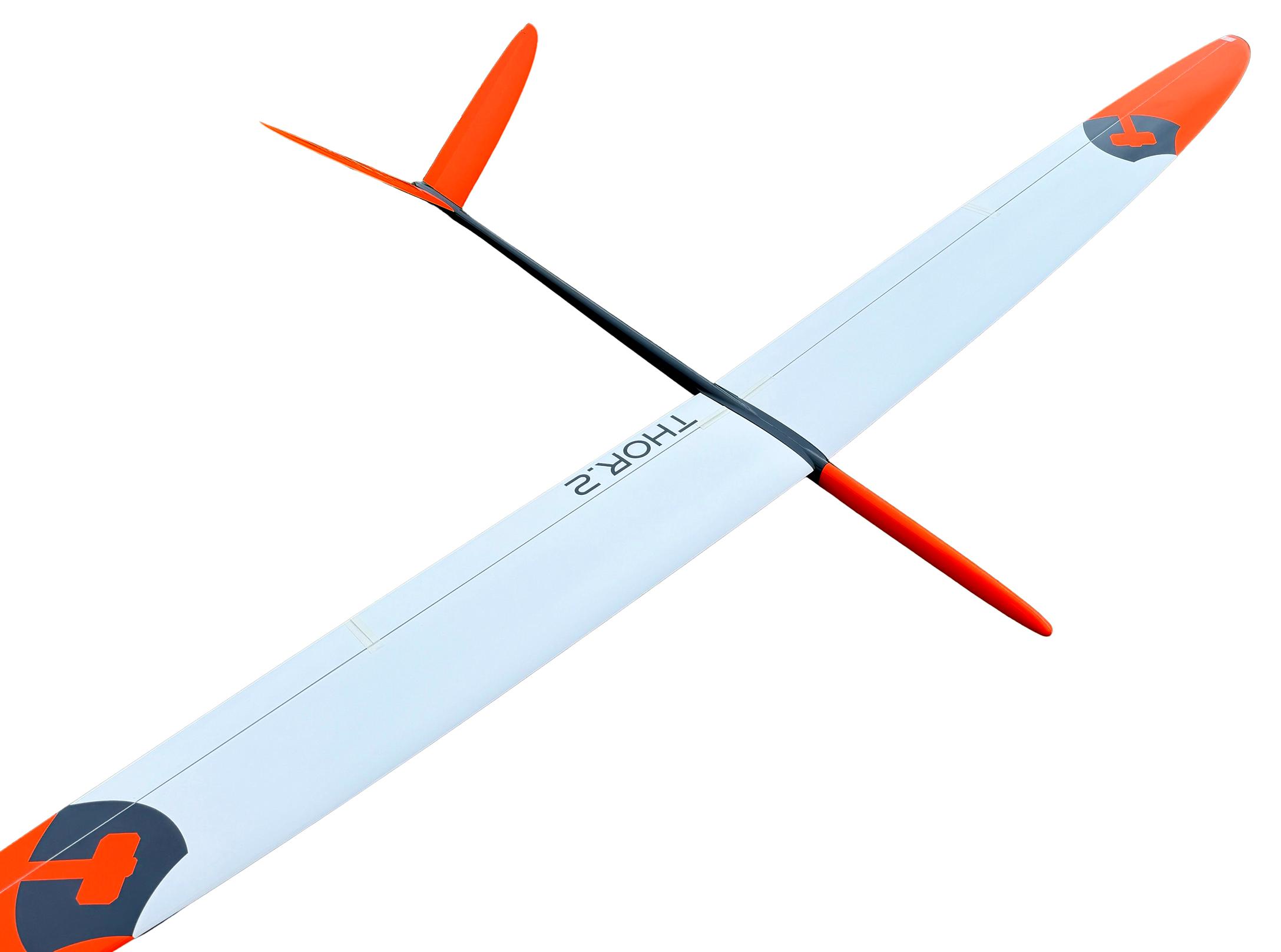
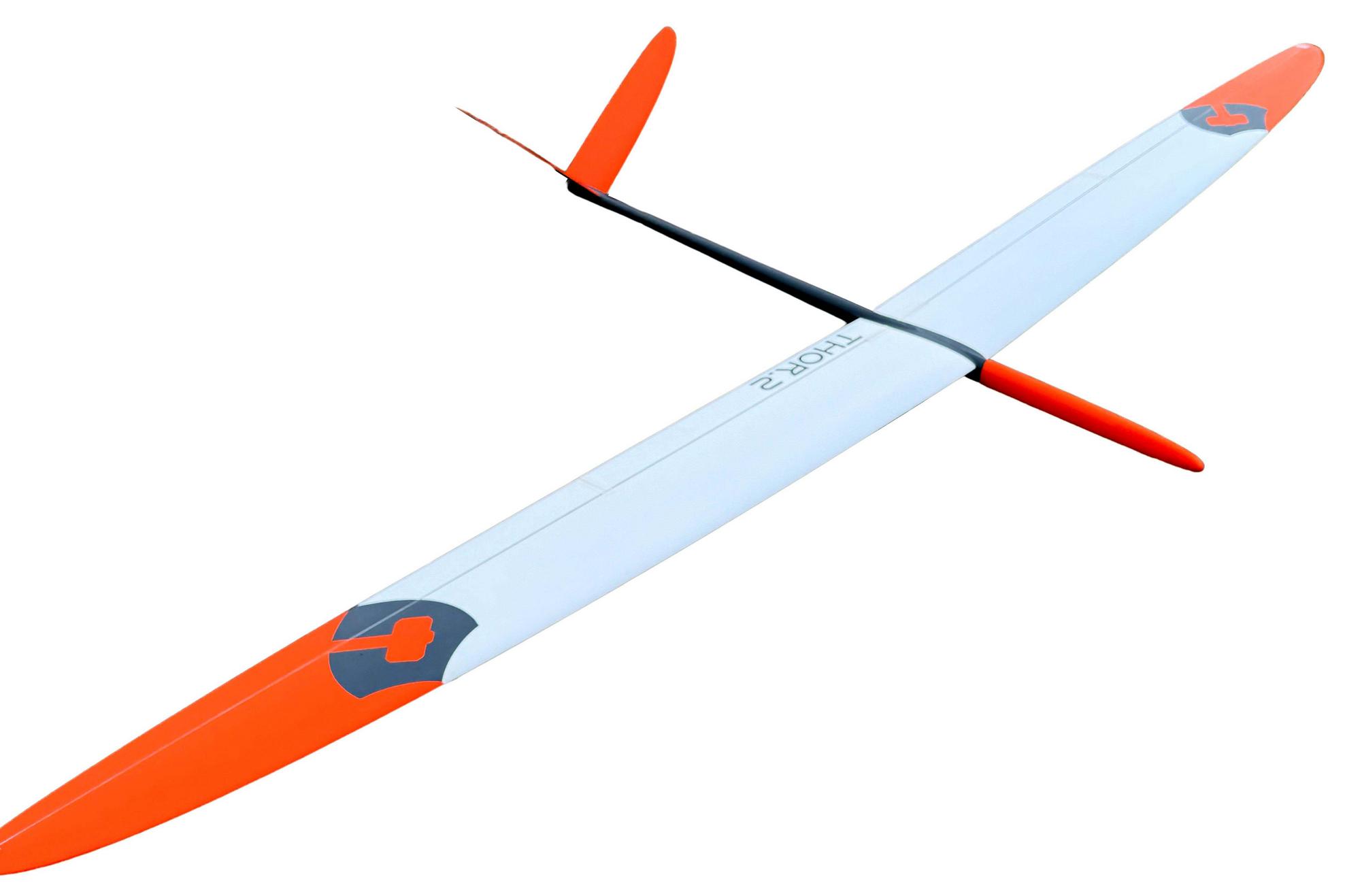
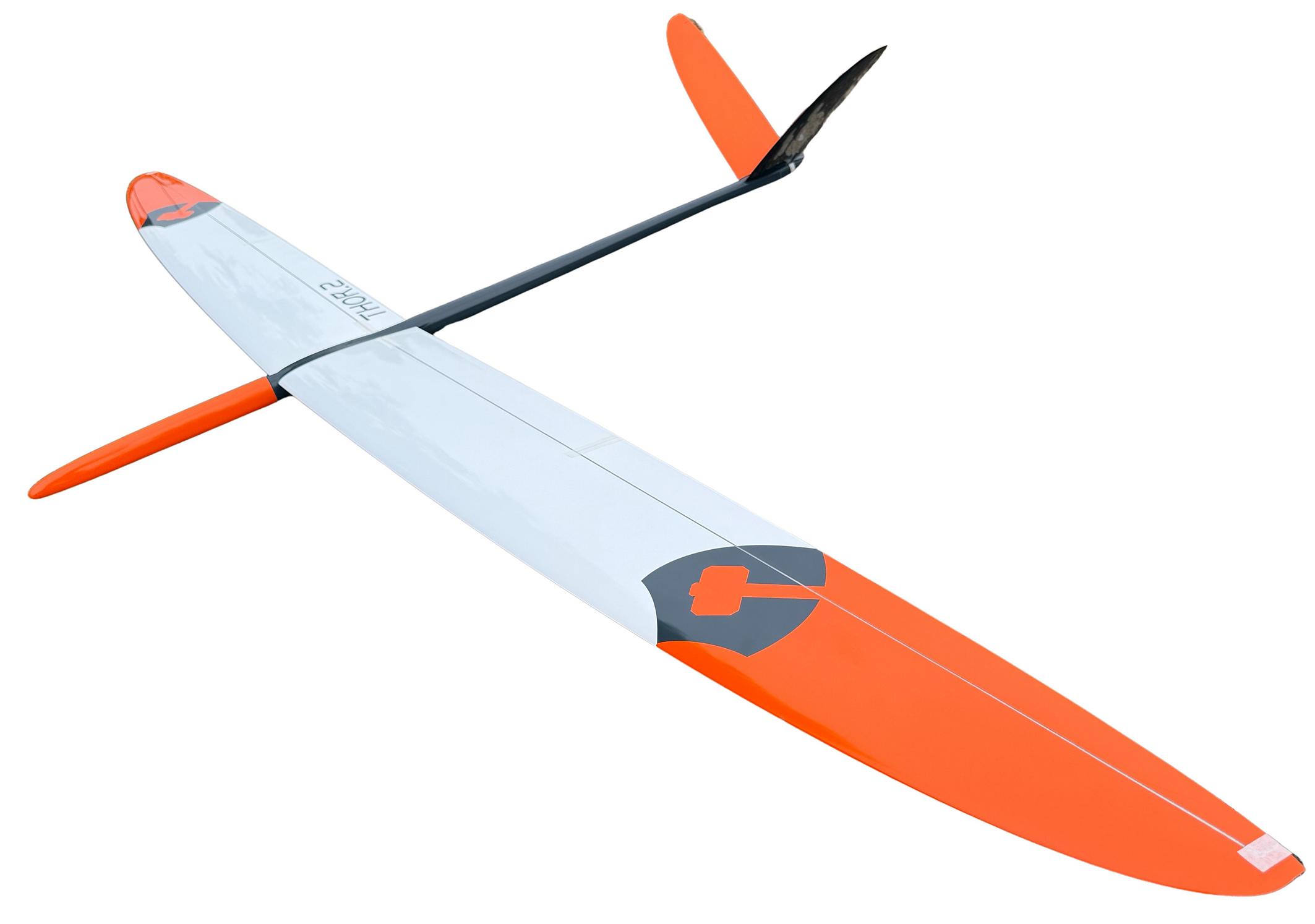
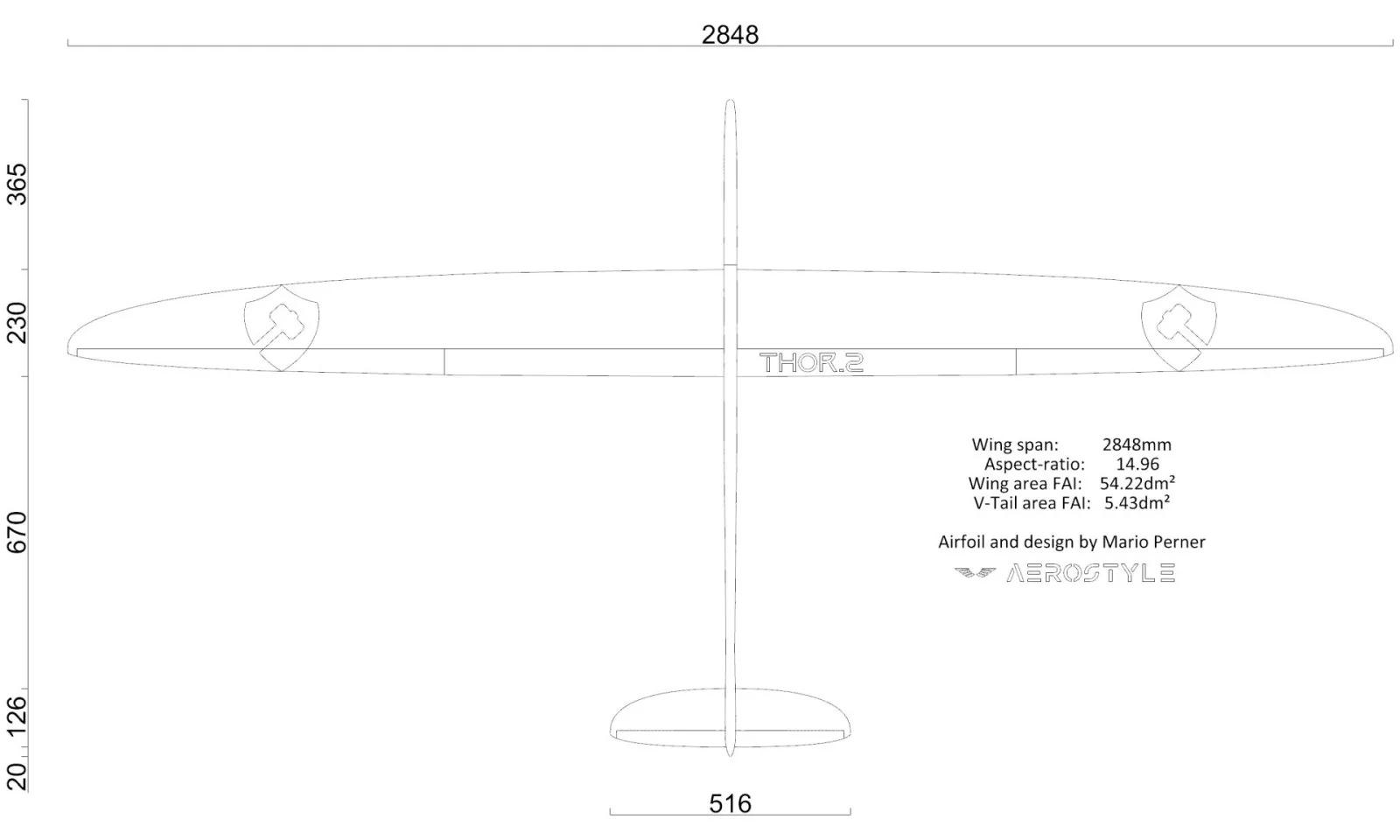
Thor.2 is a very nice F3F racer and fast sport glider. Designed by Mario Perner, the Thor.2 has gained a reputation as a superb high-performance sport glider, equally at home as an introduction to F3F racing or for fast slope soaring.
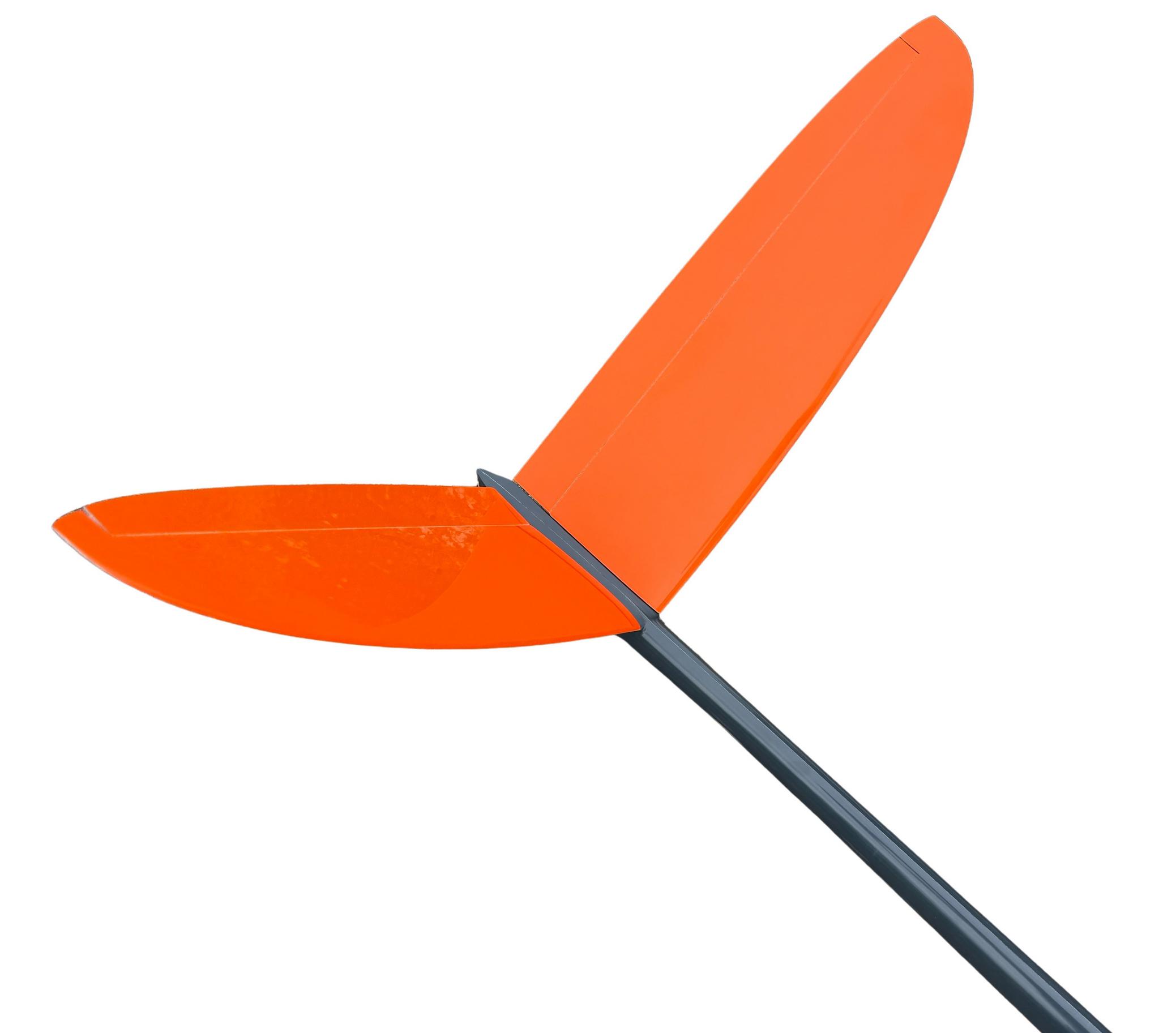
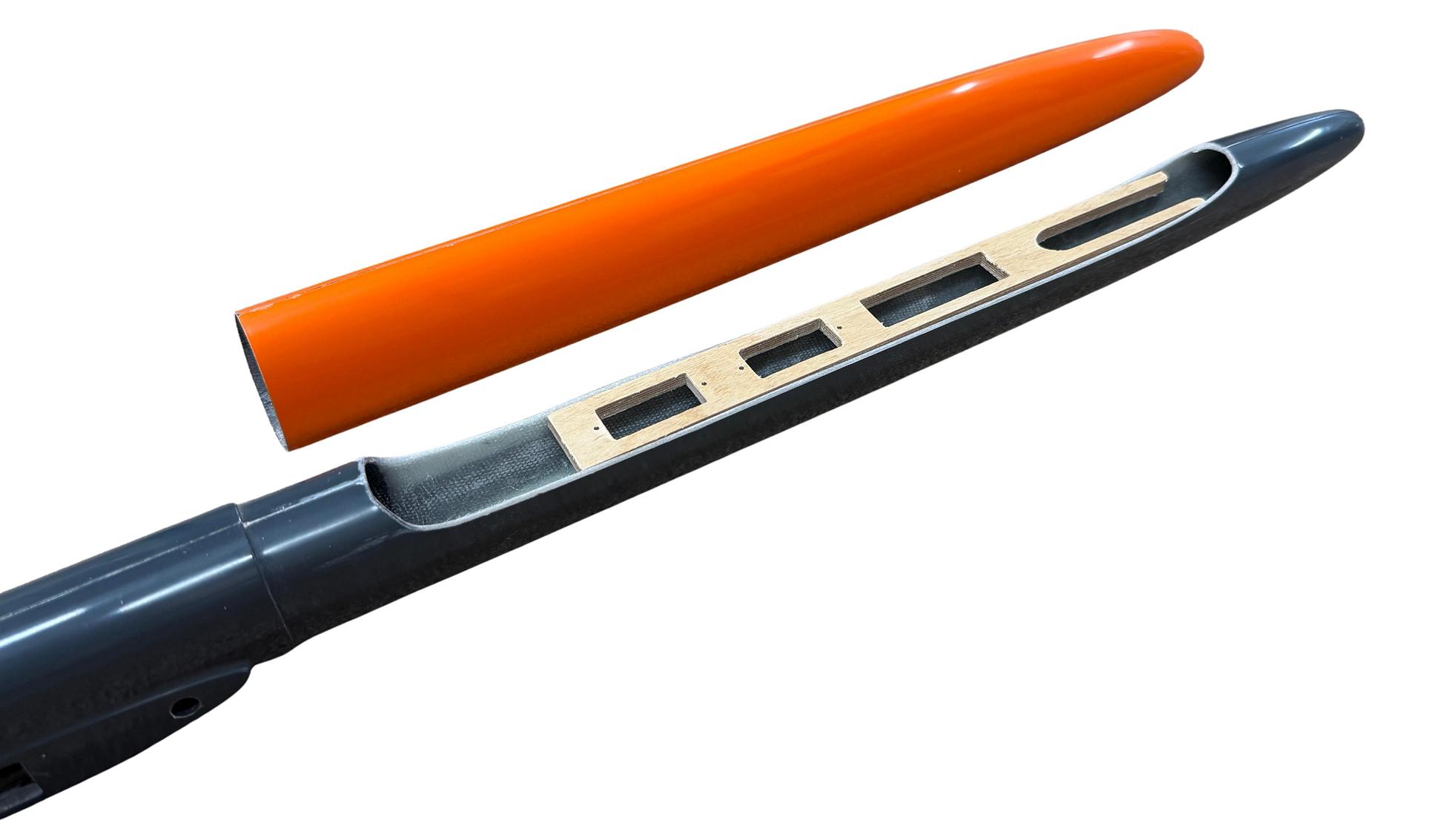
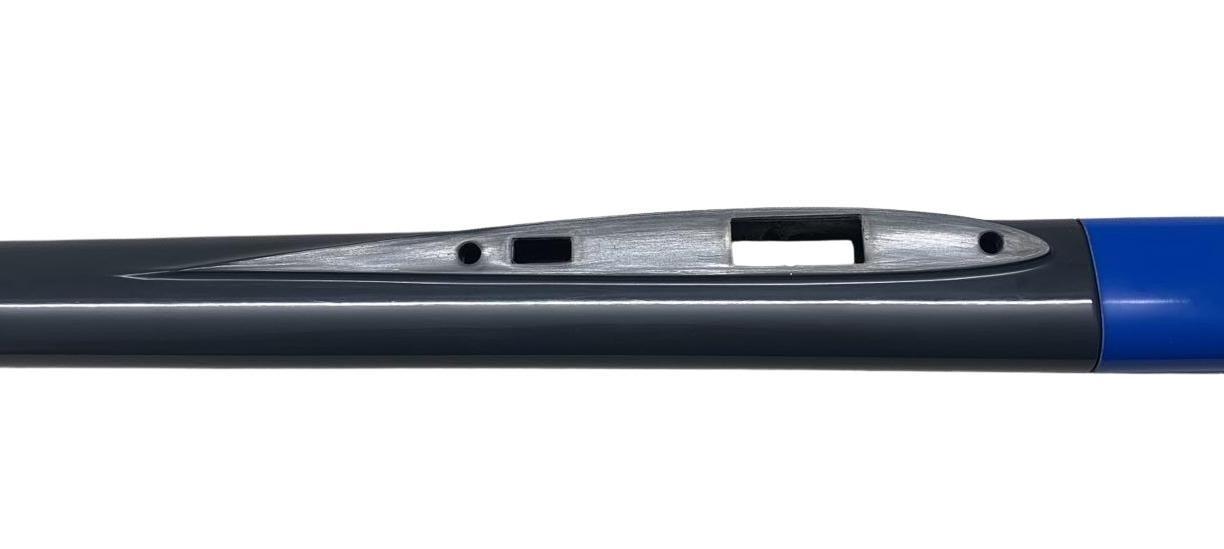
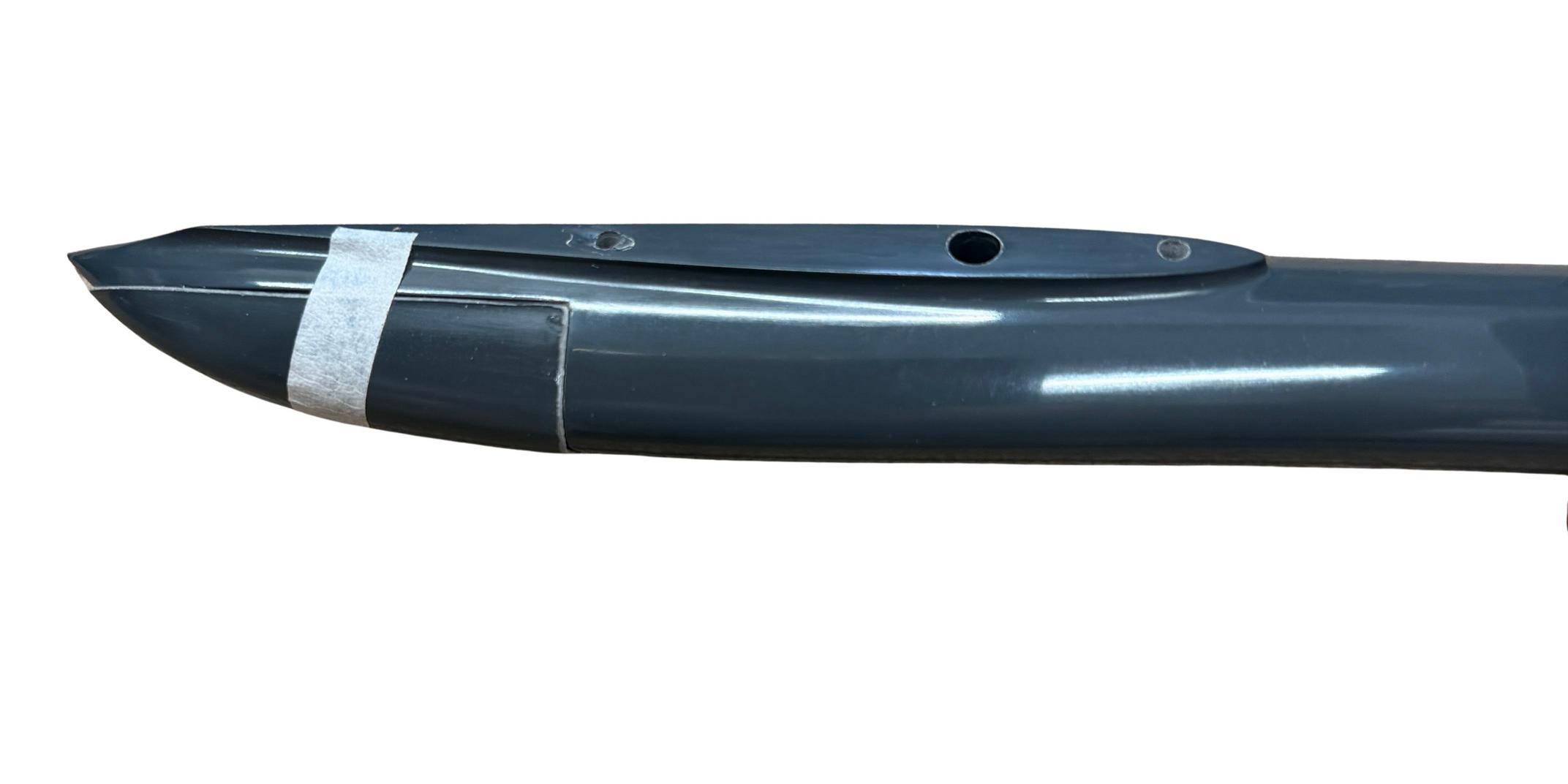
The model is beautifully moulded in carbon composite, with glass fibre used in the forward fuselage to provide good radio transparency. The slip-on nosecone gives excellent access to the radio installation. The V-tail linkage is neatly implemented, with the control horns hidden within the tail fairing.
The wing joiner is a very substantial carbon block, giving plenty of confidence when pulling high G. The wings incorporate ballast pockets measuring 12 x 24 x 260 mm, allowing approximately 1.5 kg of lead ballast to be carried.
From the designer:
The idea behind the THOR.2 was to create a modern, versatile slope soaring model that gives sport pilots plenty of fun and enjoyment on the slope, while also being competitive enough to provide an entry into the F3F and F3B competition scene without having to invest €2,000–3,000 in each model.To achieve this, several factors have to be considered during the design and construction, particularly practical construction, structural strength and the choice of materials for the individual components. The well-known competition models from mainly European manufacturers are expensive partly because very costly materials have to be used to achieve low empty weights while retaining very high stiffness and strength.Thin airfoils, often less than 8% thick, are currently used to help achieve this. I also used thin airfoils for the Vrace, Vantage and Valkyrie. However, irrespective of construction considerations, my experience is that such thin airfoils often require more attention and time to find a suitable setup. At the risk of generalising, I would say that thicker airfoils tend to be more user-friendly than thinner ones. With this in mind, I consider a thickness of around 8.0–8.3% for the main airfoil to be a sensible choice.The situation is a little more relaxed towards the outer wing. Torsional loads still have to be considered carefully, but bending loads decrease progressively towards the tip, allowing the airfoil thickness to be reduced. I therefore reduce the thickness of the outer-wing airfoil to approximately 7.5%.There is a rectangular ballast pocket in each wing measuring 25 x 12 x 260 mm. Brass ballast slugs of this size would weigh approximately 1.3 kg. Sorry, we cannot supply these.
See
this thread on the Aloft forum for more info.
| Thor.2 Specifications |
|---|
| Wing span |
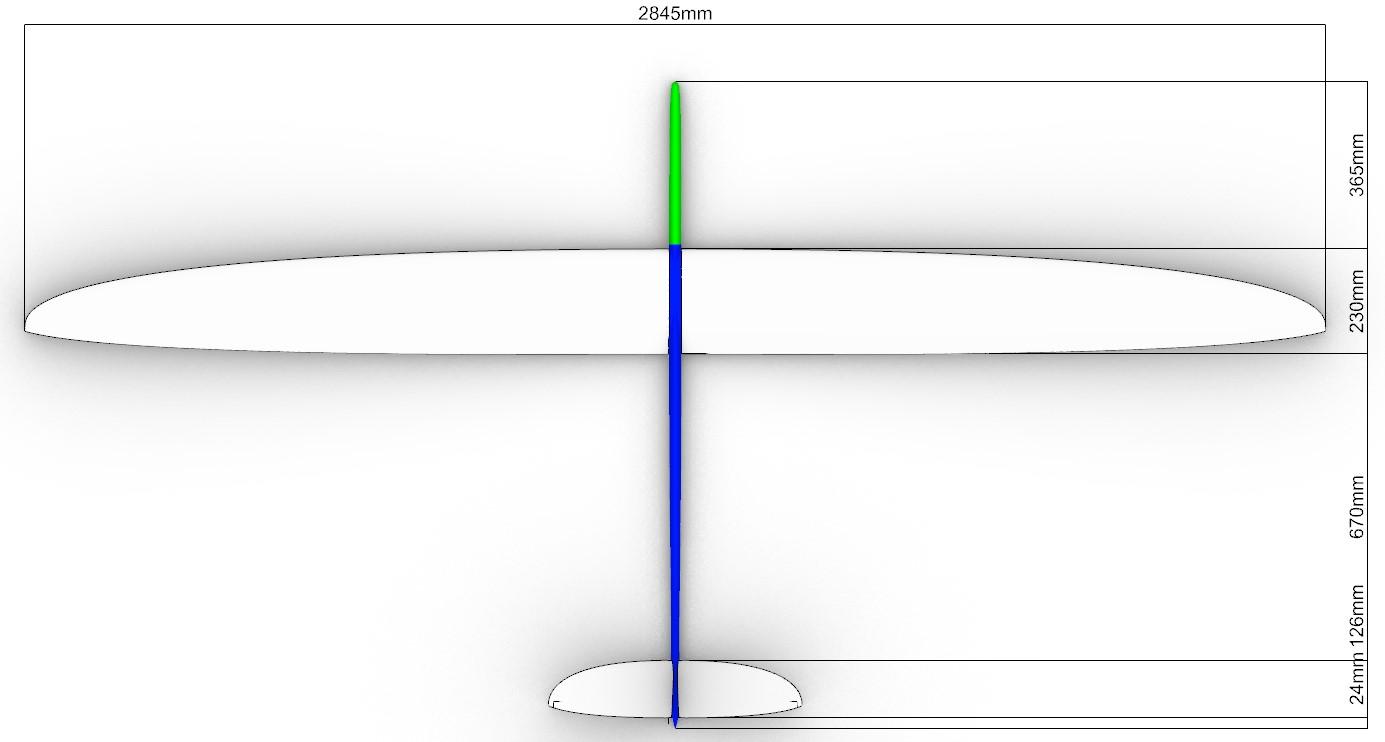
2.85 m |
112 in |
| Wing area |
54.2 dm2 |
840 sq in |
| Length |
143 cm |
56.3 in |
| Flying weight from |
2450 g |
86.4 oz |
| Wing loading |
45.2 g/dm |
14.8 oz/sq ft |
| Aspect ratio |
15.0 |
| Wing airfoil |
By Mario Perner |
| EDA (dihedral) |
2.0º |
| Centre of Gravity |
100-105 mm from wing leading edge |
| Controls |
Ailerons, flaps, V tail |
| Recommended RC |
|---|
| V tail (servo body max 25 mm x 12 mm) |
KST DS145, KST X10-710, KST DS215MG, KST X12-508, KST MS320, MKS HV6125e, MKS DS6125e, MKS HV6130H |
| Flap (servo max 12 mm thick) |
MKS HV6130, KST DS125, KST X10 |
| Aileron (servo max 10 mm thick) |
MKS HV6130, KST DS125, KST X10, KST X10 Mini, CHA HV85H |
| Receiver |
6 channel rx to match your transmitter |
| Power |
2S 18650 LiFe |
| Recommended Control Throws (for 105 mm CG) |
|---|
| V tail pitch |
6 mm up / 7 mm down |
| V tail yaw |
10 mm left / 10 mm right |
| Ailerons |
10 mm up / 7 mm down |
| Flap (brake) |
75 deg or as much down as possible |
| Snap flap |
up to 5 mm down flap with up elevator. Ailerons move with flaps |
| All measured at the widest point. |
| Thor.2 Typical Weights |
|---|
| Fuselage inc nosecone |
290 g |
10.2 oz |
| Left wing |
669 g |
23.6 oz |
| Right wing |
672 g |
23.7 oz |
| V tails |
90 g |
3.2 oz |
| Wing joiner |
213 g |
7.5 oz |
| Accessories |
41 g |
1.4 oz |
| Total structure |
1990 g |
70.2 oz |
| Wiring |
30 g |
1.1 oz |
| Pushrods |
50 g |
1.8 oz |
| Receiver |
8 g |
0.3 oz |
| T tail servos (2) |
40 g |
1.4 oz |
| Wing servos (4) |
92 g |
3.2 oz |
| Battery |
140 g |
4.9 oz |
| Nose weight |
100 g |
3.5 oz |
| Flying weight from |
2435 g |
85.9 oz |